On July 26th, our nation celebrates the anniversary of the Americans with Disabilities Act (ADA), one of the most significant civil rights laws in American history. When the ADA was signed into law in 1990, it represented a promise. A promise that people with disabilities should have the opportunity to work, learn, travel, shop, worship, and participate fully in community life without discrimination. That promise changed America and the everyday ways we go about our lives. Today, curb cuts help parents pushing strollers as much as wheelchair users. Closed captions help people who are deaf or hard of hearing, and anyone watching a video in a noisy airport or a quiet waiting room. Accessible entrances make it easier for older adults, delivery workers, travelers with luggage, and families with young children. The ADA has improved life for all of us, often in ways we no longer even notice. But laws alone do not build inclusive communities. People do.
The ADA can require an accessible entrance. It cannot require someone to offer a welcome. It can require equal opportunity. It cannot create belonging. That part, that work belongs to us. Every day we make choices that either strengthen or weaken the promise of the ADA.
Do we assume competence before limitation? Do we invite people with disabilities into conversations instead of speaking for, over or around them? Do we design meetings, events, businesses, and neighborhoods so everyone can participate from day one or only after a complaint or request comes in We like to talk about having everyone at the table, but do we even notice when someone is left out?
Accessibility begins with policy, but inclusion begins with people. As we celebrate Disability Pride Month, I hope we also celebrate the countless individuals who quietly live out the spirit of the ADA every day. The employer who offers flexibility instead of assumptions and job strikes. The teacher who believes in a student’s potential, even when the test grades are not the highest in the class. The neighbor who checks in on an elder during a heatwave. The healthcare professional who listens and spends a few extra minutes with a patient. These acts may seem small, but together, they build communities where people belong.
The ADA is not simply a law that protects people with disabilities. It is a statement, like the Preamble to the Constitution, that spells out what kind of nation we aspire to be. While we are not hearing it from the People’s House right now, we are a nation where opportunity is not reserved for the very few. We are a nation where dignity is not conditional. We are a nation where we believe every person has something valuable to contribute. As we mark another ADA anniversary, let us also remember that the work continues, especially during these times of unprecedented challenges.
While laws open doors, it is our communities that decide whether people feel welcome once they walk through them. It is people that make it easier or harder to access the freedoms attached to these laws. While the next chapter of disability inclusion is being debated and tried in legislatures or courtrooms, what we do every day will keep it written in classrooms, workplaces, neighborhoods, healthcare offices, houses of worship and around dinner tables. It will be written in the everyday decisions each of us makes about how we treat one another. Are you helping to build the kind of community the ADA imagined?
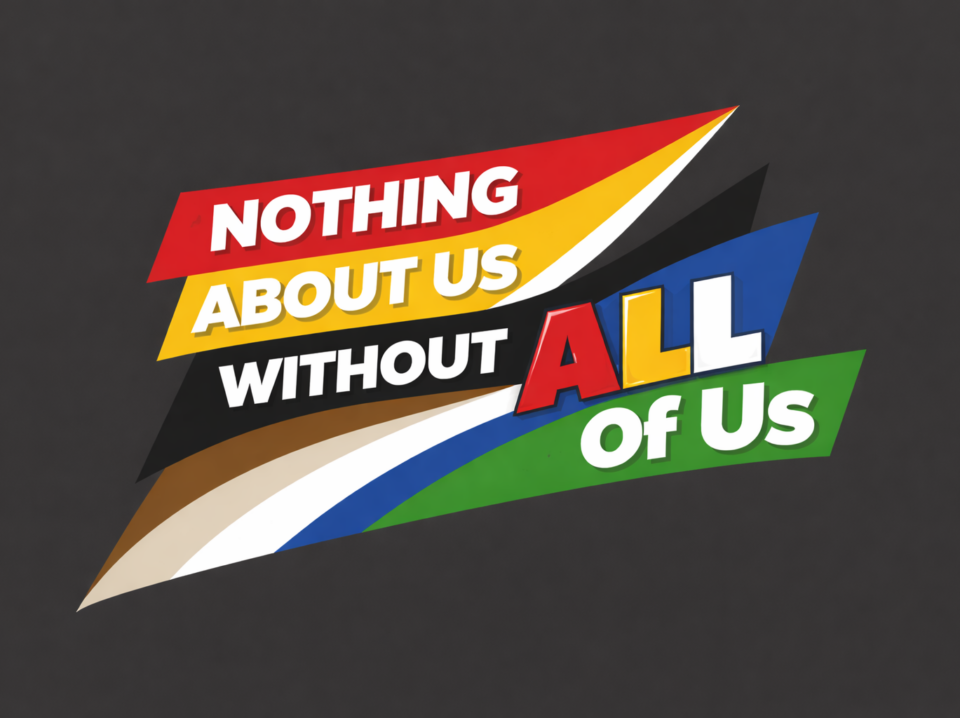
The ADA gave us a vision. It is still law. Now, it is our responsibility to keep defending and building upon it. Because the strongest communities aren’t those where everyone is the same. The strongest communities are the ones where everyone belongs. Remember, “Nothing About Us Without ALL Of Us.”